IPCC's Sixth Assessment Report on Climate change – Key takeaways

What is it?
The Intergovernmental Panel on Climate Change (IPCC), which was founded in 1988, is the United Nations organization in charge of reviewing climate change science. It was established to offer frequent scientific evaluations of climate change, its consequences, and potential future dangers to policymakers. Its assessment reports are an important part of international climate change talks.
The IPCC's work is divided into three expert working groups (WGs): WGI, which evaluates the physical scientific foundation of climate change; WGII, which evaluates the susceptibility of socio-economic and ecological systems to climate change; and WGIII, which evaluates climate change mitigation measures.
WGI released its contribution to the Sixth Assessment Report (AR6) — The Physical Science Basis of Climate Change — last week.
Key takeaways
Under all emission scenarios assessed by the IPCC, global surface temperature will continue to rise until at least the mid-century. The 2015 Paris Agreement, which set a goal of keeping global warming to 1.5 degrees Celsius above pre-industrial levels, will potentially be broken. This restriction was imposed because it was thought that issues may increase exponentially beyond that point.
Climate change caused by humans is already affecting every location on the planet. Despite recent attempts by several countries to address the danger of carbon emissions and business promises to become carbon neutral, things are likely to worsen for the foreseeable future.
According to the report, global warming induced by human activity is projected to be around 1.0°C over pre-industrial levels, with a likely range of 0.8°C to 1.2°C. If current trends continue, global warming could likely exceed 1.5 degrees Celsius between 2030 and 2052.
Climate-related hazards to natural and human systems are higher at 1.5 degrees Celsius than they are now, but lower at 2 degrees Celsius. These hazards are dependent on the size and pace of warming, geographic location, levels of development and susceptibility, as well as the adaptation and mitigation measures chosen and implemented.
Extreme weather patterns in every area of the world mentioned in the study have far-reaching implications for our lives and health. Drought and flood damage to agricultural and food production, as well as the economic and humanitarian implications, are equally as bad.
The way the globe reacts will have an influence on global economies, job possibilities, and investment opportunities. Therefore capacity building programmes and resilience training in view of future challenges is so crucial.
The full report is accessible for more insight at the following link: https://www.ipcc.ch/report/ar6/wg1/

Climate change tipping points: a look at the case of the AMOC

What’s a Climate change tipping point?
In the climate system, a tipping point is a threshold that, if crossed, can result in substantial and often permanent changes in the system's state. In the physical climate system, affected ecosystems, and human systems, potential tipping points have been identified.
Climate change tipping points are reached when certain effects of global warming, such as the irreversible loss of ice sheets or forests, become uncontrollable. In the past, significant heating of 5 degrees Celsius was assumed to be required to reach tipping thresholds, but new research reveals that this could happen at temperatures between 1 and 2 degrees Celsius.
With Greenhouse Gases (GHG) still on the rise, it is increasingly likely that we could be heading towards lasting and irreversible changes in terms of climate on the planetary scale.
According to a dire warning from experts, the globe may have already crossed a series of climatic tipping points.
A concrete tipping point: The risk of an AMOC dysregulation
A new study released on the 5th of August 2021 has found that currents known as the Atlantic meridional overturning circulation (AMOC) showed “an almost total loss of stability over the previous century,”.
The AMOC (Atlantic meridional overturning circulation) is the Atlantic Ocean's zonally integrated component of surface and deep currents. The ocean currents circulation is characterized by a northward flow of warm, salty water in the top layers of the Atlantic and a southbound movement of colder, deep waters.
A dysregulation of the AMOC would have devastating global effects, potentially interrupting the rains that billions of people rely on for food in India, South America, and West Africa; intensifying storms and decreasing temperatures in Europe; and raising sea levels off the east coast of North America. It would also potentially severely impact countries beyond the Atlantic already vulnerable to heavy storms and sea rising such as Indonesia and other countries in Oceania. It would also have important implications for marine ecosystems as nutrient-rich water from the arctic won't be brought up to swallower depths thus fuelling trophic links.
It is still uncertain as to when would the tipping point could be crossed. However, there is an urgent need to act in order to reduce our GHG production. It is also becoming clearer by the day that there is a real need to encourage preparedness and resilience building across countries that would be the most heavily impacted by such an event.
Key projects in the Atlantic such as the Life’Adapt Island project are already dealing with the first outcomes of this evolutive dysregulation. The project acts to protect, sustainably manage, and restore natural or modified ecosystems to directly address societal challenges and environment challenges in an effective and adaptive manner, while ensuring human well-being and producing benefits for biodiversity.
Projects such as Climate Resilient and Inclusive Cities proposing a long lasting and unique cooperation between cities and research centres in Europe, Indonesia and other countries from South East Asia are a real asset in supporting resilience building in vulnerable countries.
Devastating floods across Belgium and Germany

Last week, catastrophic rains and floods impacted Germany and Belgium. In particular, the cities of Liege, provinces of Namur and Luxembourg heavily suffered.
While many inhabitants had to flee their homes, others unfortunately perished due to the sudden onset of the rising waters.
This is a stark reminder that climate change cannot be ignored anymore and that regardless of the the geographic area, communities need to be prepared and adapt to the evermore present and changing threat.
The work carried out by organisations involved in international development is now more crucial than ever. Good practices in terms of early warning systems and territory planning are going to become key in preventing and mitigating these phenomenons going forward.
Pilot4dev works towards an adaptation fund which you can support here: https://www.gofundme.com/f/fund-for-climate-change-resilience-building

Discover The Routledge Handbook of Feminist Peace Research
We congratulate Professor Élise Féron on her contribution to The Routledge Handbook of Feminist Peace Research. Dr. Élise Féron is a board member of Pilot4DEV and Director of our program Pilot 4 Research and Dialogue in Tanzania. You can find more about the project here: https://www.pilot4dev.com/projects/94-pilot-4-research-and-dialogue
Renewal of EcoPorts Label Certification for the Grand Port de Maritime Guadeloupe

Pilot4DEV will be accompanying EcoPorts for the renewal of the EcoPorts label certification for the Grand Port de Maritime Guadeloupe. This is in accordance with our current LifeAdapt Island project that is focused on the restoration and conservation of the mangroves throughout the maritime area of Guadeloupe. You can learn more about the project here: https://www.pilot4dev.com/projects/95-life-adapt-island-restoration-of-eco-systems
The EcoPorts label certification is provided to proactive ports in Europe which are taking voluntary steps to integrate environmentally-friendly targets to make ports more sustainable. Ports are critical points of access and connection for cargo to be passed back and forth between railroads, trucks, and ships. This is why it is crucial for ports to be the first step to embracing a more sustainable approach that will then trickle down and shape the global supply chain.
Not only this, but sustainable and environmentally friendly ports are important for taking the next steps towards better waste management and conservation of marine life. For this, EcoPorts facilitates opportunities for knowledge exchange between different ports that encourage cooperation through collaborative environmental projects.
We believe that the renewal of this certification - for the Grand Port de Maritime Guadeloupe - points to a more sustainable future through cooperation between various stakeholders for the conservation of marine life and the improvement of port activities in Guadeloupe.
EVENT - Urban Land, Positive Values For The City Of Tomorrow 22 & 23 of June

We are pleased to announce that Professor Youssef Diab, Board Member at Pilot4dev will be co-organising an event on inert soil usage as a key ressource for the future of cities.
Following a first colloquium in April 2019 titled La terre dans tous les états, which focused on urban land as a resource and material with numerous aspects, ECT and EIVP are expanding the conversation by putting land at the center of contemporary discussions on sustainability. Their teaching and research Chair places a strong emphasis on social, environmental, and economic issues.
The conference Urban Land, Positive Values for the City of Tomorrow proposes that this resource be treated as:
- a vector for the rehabilitation of neglected sites;
- a structuring element for new territorial landscapes;
- an environmentally friendly building material;
- and, finally, an essential element for the urban integration of issues of various kinds of green spaces and biodiversity.
The event will be in french and is designed as a hybrid one: it will be possible to attend the presentations online or physically premises, with a limit of 85 physical participants per session (half capacity).
You can register here:
Event: Post-COVID Cities: Reinventing World Cities
We are pleased to announce that Professor Jeffrey Raven, Board Member at Pilot4dev will be moderating a webinar on the reorganisation and adaptation of cities in a post-covid landscape.
The second of three high-profile events titled Post-COVID Cities, “Reinventing Global Cities,” focuses on the future of New York City after the pandemic.
Participants in this program will learn how other global cities emerging from the pandemic are
positioning themselves to achieve aspirational social goals while implementing zero-carbon policies for the twenty-first century.
Policy briefs of the first Pilot 4 Research and Dialogue study
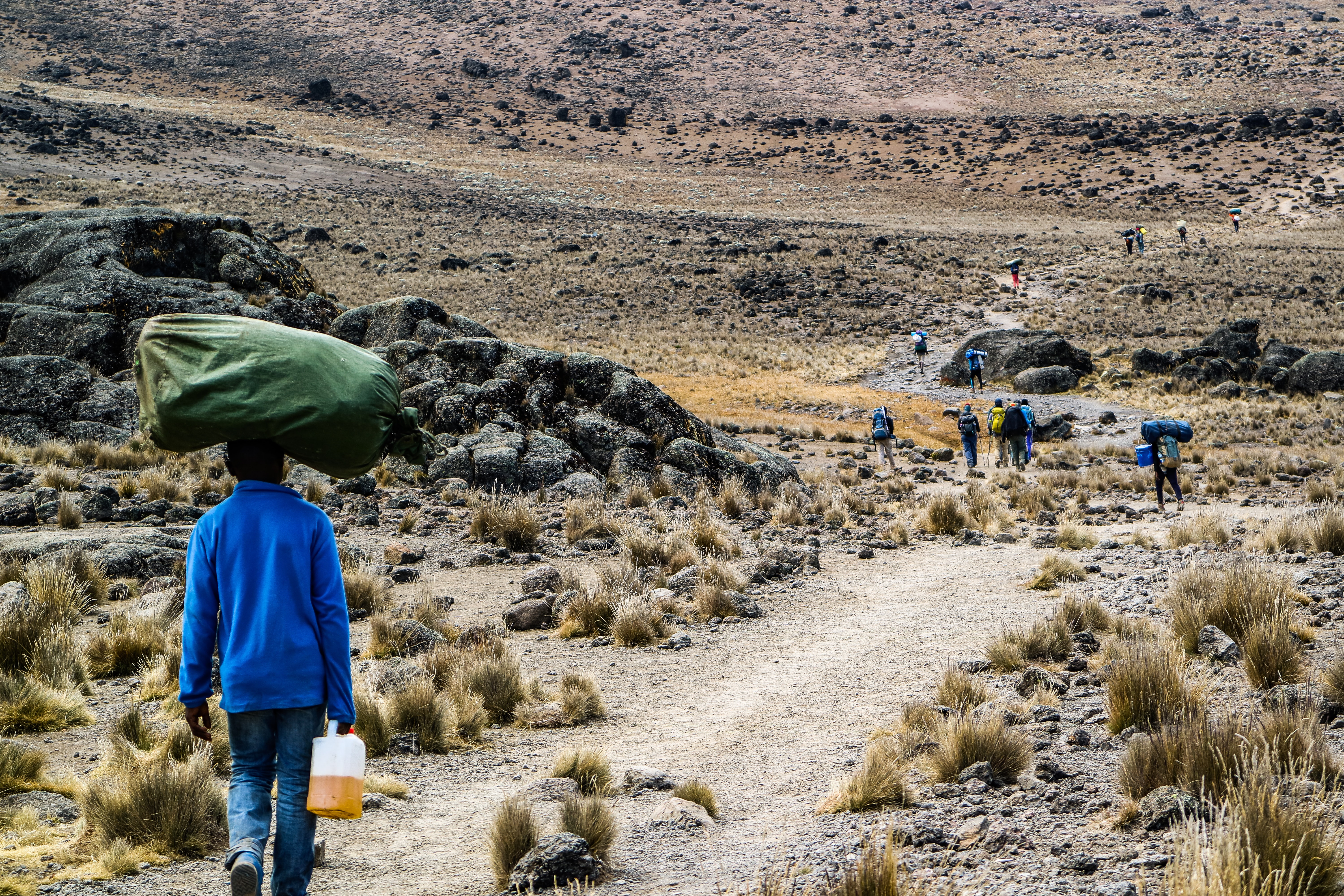
We invite you to explore the key findings of the first Pilot 4 Research and Dialogue study encompassed into 3 separate policy briefs. Those briefs intent to summarize the effects of Macroeconomic policies on the mining sector, progress in regards to SDGs and Tanzanian youth employment and future.
The key focus of this study is to present the results of the interim assessment, which aimed to conduct an in-depth overview of Tanzania's macroeconomic and fiscal reforms as the second FYDP II (2015/16-2020/21) is implemented.
You can find below the 3 policy briefs below for ease of access:
Policy Brief 1 – “Two Decades of Reforms in the Mining Sector in Tanzania: A Way Forward”
This policy brief addresses the mining sector's current problems in order to offer guidance for the next step of reforms. The brief focuses on gold mining in the artisanal and small-scale mining (ASM) and large-scale mining subsectors, respectively.
This brief reflects primarily on the main concerns in the new SDG deployment model that key stakeholders must address. The brief also suggests realistic approaches Tanzania might take to completely realize the SDGs' potential at the local level.
Policy Brief 3 – “Empowering Tanzanian Youths in Agribusiness: Lessons from the SUGECO Model”
This policy brief uses a case study from SUGECO's "Youth Special Incentive Schemes in Agribusiness in Tanzania (2014-2019)" project to argue for a more successful model of youth engagement in agribusiness.
In the coming months, two additional studies will be released by the Pilot 4 research and dialogue project, we will keep you updated as they become available.